
AS THE FOUNDER/DIRECTOR OF THE HORSE HOSPITAL, AN INDEPENDENT ARTS CENTER, HE CREATED AND NURTURED A HOME FOR AVANT-GARDE, EXPERIMENTAL, AND LABEL-DEFYING ARTISTS
Published on January 11, 2026
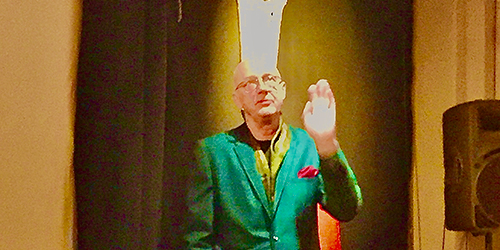
In London, the influential artist, fashion historian and collector, and exhibition curator Roger K. Burton died in August of last year at the age of 76. Burton was the founder and director of the Horse Hospital, an independent arts center located in the British capital’s Bloomsbury district, where it became a showcase for avant-garde, underground, and experimental art-makers’ creations in a wide range of genres and media.
brutjournal’s London-based artist-correspondent Cathy Ward knew Burton well and exhibited her own works at the Horse Hospital on more than one occasion. Now, looking back on what has been widely recognized as a tremendous loss to London’s and to Europe’s broader artistic community, Cathy offers this personal reminiscence of Burton’s life and appreciation of his legacy.
Cathy Ward reports:
LONDON — Until his death in August 2025, Roger K. Burton worked tirelessly to preserve the Horse Hospital, an 18th-century, brick building in central London, and to nurture the arts institution of the same name he had founded there in 1992, which became his life’s work. Keeping the institution alive as a vibrant arts venue and clothing archive, and protecting its building’s unique historic character from the threat of destructive redevelopment became a real struggle.
In researching the old brick structure’s history, Roger discovered that the Georgian and Regency-era architect James Burton, who designed much of The Regent’s Park and the Bloomsbury district, was responsible for creating the building in 1793. Roger’s preservation efforts led to it being listed both as a Community Asset and as a Grade II structure (historic-landmark designations in the United Kingdom), which assured that it would survive into the future.
In the years prior to Roger’s passing, his struggle to keep the lights on at the Horse Hospital was especially challenging, but fortunately, he was able to secure the kind of funding that would allow him to keep the arts center alive. However, even as he was organizing “The In Crowd: Mod Fashion & Style 1958-66,” a much-anticipated exhibition that was scheduled to open at the Brighton Museum & Art Gallery on May 10, 2025, he was diagnosed with a rare, aggressive form of leukemia.
Born in 1949, as Britain was recovering from the hardships of World War II, Roger grew up surrounded by the physical relics and social vestiges of that era. Rag merchants’ warehouses were filled with clothing from two world wars. Post-war rationing still shaped everyday life, and, often, if you wanted something, you ended up making it yourself.
Thus, for Roger, a DIY spirit and culture of resourcefulness became lifelong traits.
Roger grew up in Burton Overy, an ancient village in Leicestershire, southeast of the city of Leicester, whose history dates back to the time of the Domesday Book. (That record of the Great Survey of much of England and parts of Wales was completed in 1086 at the behest of William the Conqueror.)
Roger’s parents were tenant farmers in a conservative community. After his father’s unexpected death, Roger dropped out of school. He felt relieved to be out of the hands of institutional authorities and able to pursue his own unconventional path, one of learning through life experience guided by intuition.
With typical ingenuity, Roger, who himself had been a Mod, managed to source and supply original 1960s clothing for director Franc Roddam’s 1979 dramatic film Quadrophenia, which was based on The Who’s 1973 rock opera of the same name. The movie’s success allowed Roger to expand the 20th-century clothing collection he had begun to assemble.
Over the following decades, he went on to style some of the world’s most iconic rock stars and bands. His ability to see the creative potential for clothes other owners had discarded was more than a component of his business strategy; reflecting his instinctive resourcefulness, it could be seen an essential aspect of his character. Roger was able to see value in what others overlooked, which led him to collect surplus clothing and forgotten objects others regarded as worthless.
He was invited to help redesign the shop the fashion designer Vivienne Westwood (1941–2022) and the music and multi-genre impresario Malcolm McLaren (1946–2010) operated at 430 King’s Road, Chelsea; in 1979, it reopened as World’s End. Its eccentric interior, featuring low ceiling beams, uneven floors, a backward-spinning clock, and bulls-eye glass panes, became legendary. The shop’s design was partly inspired by The Crooked House, an old pub in Himley, in England’s West Midlands region, whose building was tilted. Roger’s love of history and the handmade was reflected in his references to such a source.
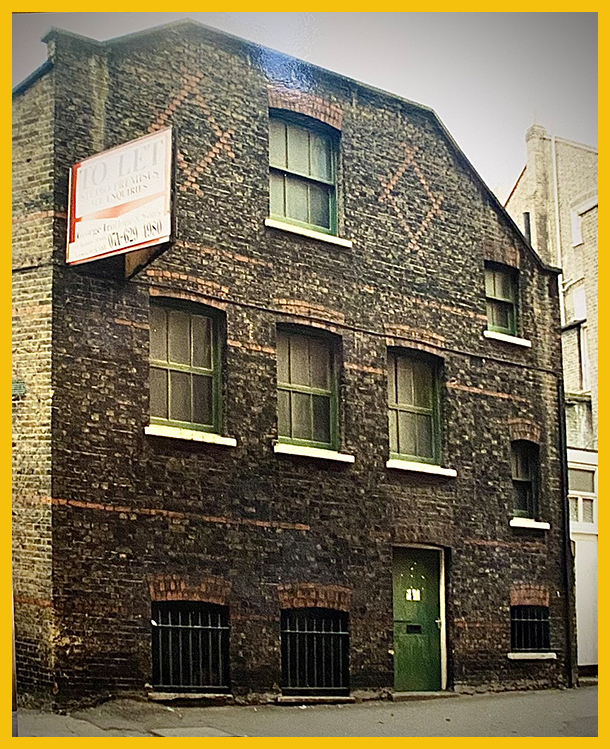
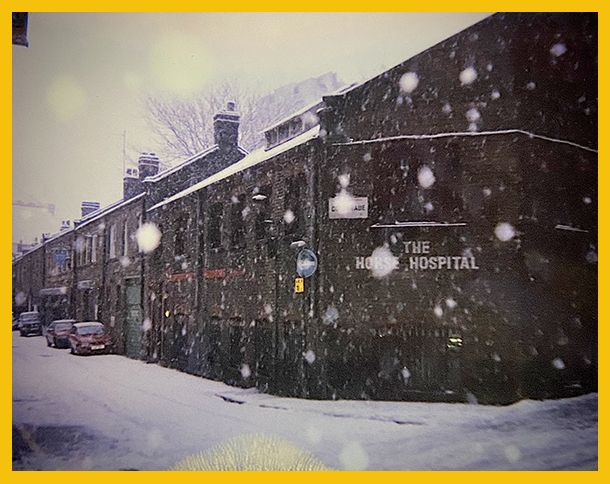
The building that would become Roger’s creative home — a forbidding Georgian structure hidden in a cobblestoned Bloomsbury backstreet — had once housed a veterinary hospital for injured cab horses. With its smoke-blackened brick walls, it resembled a building in England’s heartland in the 18th-century era of the Industrial Revolution. However, when he discovered the Horse Hospital in the early 1990s, it stood empty and was covered in ivy. Roger’s assistant, Guy Sangster Adams, helped him search for and find a property for their ambitious, arts-center project.
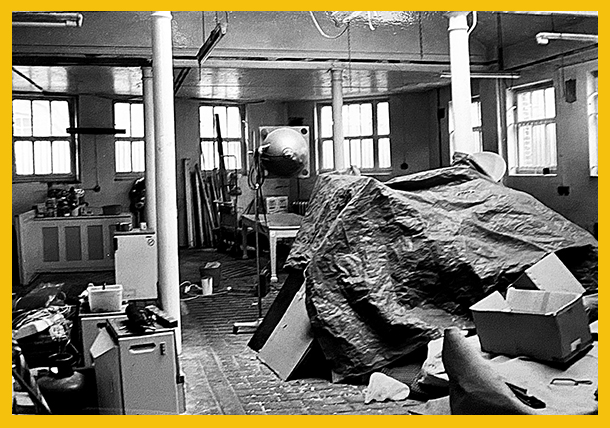
Still, the building’s strong character immediately resonated with him, and over the next three decades, Roger transformed it into both into a storage warehouse for his vast clothing archive and an avant-garde arts venue.
His extensive holdings of garments and fashion accessories became the Contemporary Wardrobe Collection, which grew to include more than 20,000 items whose styles and origins spanned five decades of modern youth culture. Regular rentals to fashion magazines, or to movie or television producers of pieces from “The Wardrobe,” as the collection became known, generated income that helped fund events and programs presented by the Chamber of Pop Culture, the Horse Hospital’s gallery.
Roger generously mentored countless young stylists who went into the fashion and film industries and, through their work, helped shape the visual landscape of British music and cinema during the final decade of the 20th century and in the opening decades of the 21st century.
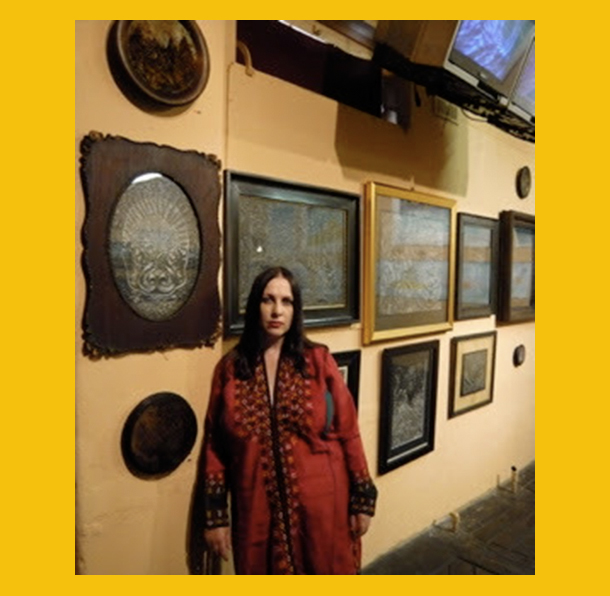
In his creative roles, Roger was entirely self-taught — a true maverick who rejected the conventional in favor of the extraordinary. He attracted a circle of like-minded individuals, including the late artist Ian White (1971–2013), with whom he curated groundbreaking Horse Hospital exhibitions showcasing artists whose work was rarely shown elsewhere in London.
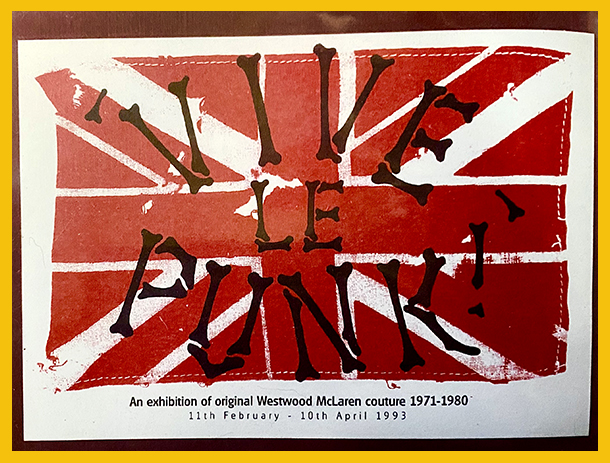
Among his most celebrated achievements was the Horse Hospital’s inaugural exhibition, “Vive Le Punk” (1993), which reunited Westwood and McLaren for the first time since the heyday of their punk-era collaborations. In conjunction with that exhibition, the creative pair took part in a discussion of the fashions they had created years earlier, playing a definitive role in the development of punk’s signature style and attitude. That Westwood and McLaren would come together to take part in such a memorable exchange, which was captured on film, testified to the trust and respect Roger inspired throughout a wide swathe of Britain’s artistic community.
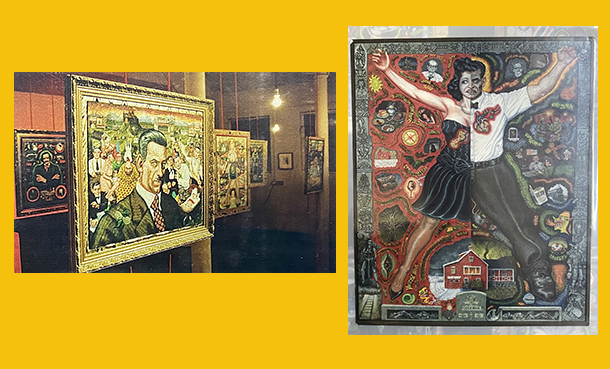
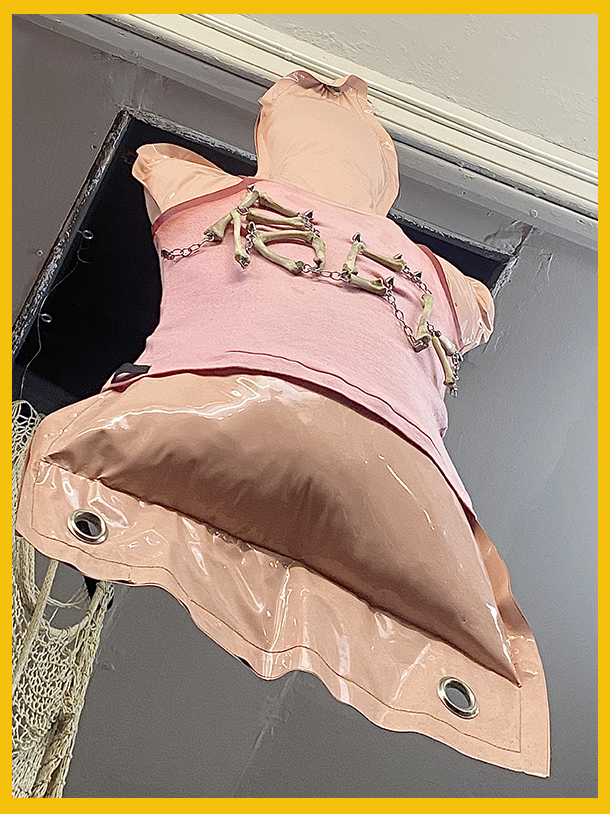
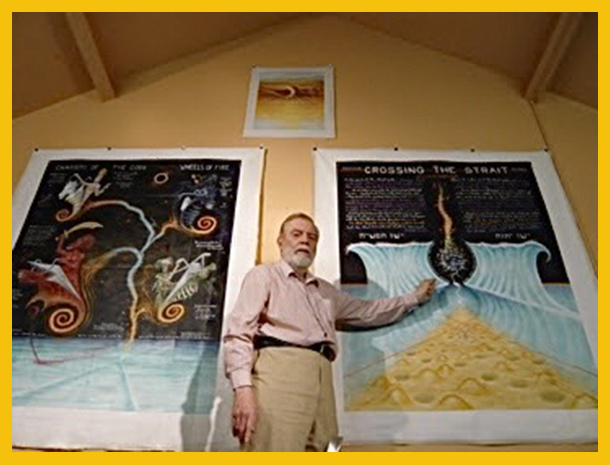
Over the years, the Horse Hospital presented numerous noteworthy exhibitions, including, among others, “Original Sin” (1998), featuring works by the American painter Joe Coleman, and “Sacred Pastures” (2008), a selection of paintings by the American artist Norbert Kox, as well as, in 2011, selections of works by the spirit artist and automatist Ethel de Rossigol (1863-1970) and, in 2014, a group of the self-taught artist Morton Bartlett’s eerily lifelike dolls.
Roger’s skill as an exhibition designer extended to the atmosphere he created in his gallery spaces; they often felt immersive, dramatic, and unusual. Meanwhile, the Horse Hospital’s vibe never felt sterile or corporate; its red and flesh-toned walls made visitors feel as though they were stepping into some kind of gigantic, living organism. The exhibitions Roger organized were rarely advertised; after all, they took place during a time before the advent of ubiquitous social media. For many viewers, they were intimate, almost sacred experiences, which are now preserved in their individual and collective memories.
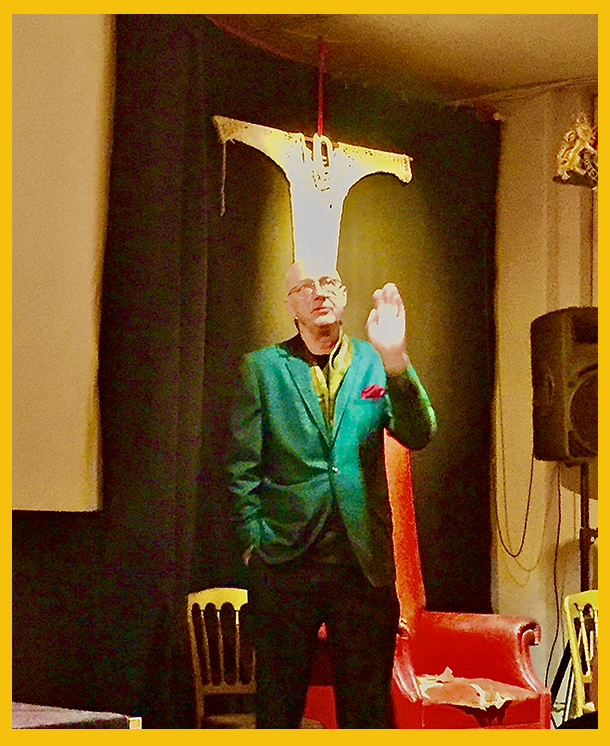
2017. Photo courtesy of Cathy Ward’s archive
Roger’s creative impulses were always ahead of their time. With his independent outlook and spirit, he rejected the trends and dictates of the art establishment. He resisted corporate influence and eschewed mainstream fads, instead preferring to provide and oversee a place in which authentic creativity could thrive.
The Horse Hospital became a treasured home for artists, musicians, writers, and performers who didn’t fit in anywhere else. In addition, through our association with the Horse Hospital, those of us who took part in its activities and programs effectively educated each other. (See our separate article featuring recollections of Roger from many of the artists and creative people who knew him.)
In his book Rebel Threads: Clothing of the Bad, Beautiful and Misunderstood (The Horse Hospital and Laurence King Publishing, Ltd., 2017), Roger documented decades of youth culture and street style, offering detailed histories of many of the garments he had collected over many years. Reflecting his deep interest in cultural history and in history in general, he once said, ‘It’s important to understand where you’ve been, to know where you’re going — because at the end of the day, the destination is the journey.”
Roger is survived by his wife, Izabel, whom he met in 1975 and married in 1983, and by their children, Stevie, William, and Simon; and also by his grandchildren — Sam, Harrison, Nancy, Emmett Joe, and Ben. His family’s generosity and understanding allowed Roger to dedicate so much of his life to his work. His accomplishments and enduring influence now constitute a powerful legacy that will continue to inspire artists and the cultural community for years to come.